
Epoxy Floor Maintenance: How to Keep Your Garage Floor Looking New
Learn epoxy floor maintenance tips for South Florida garages, including cleaning, tire marks, warranty care, and when to call for help.
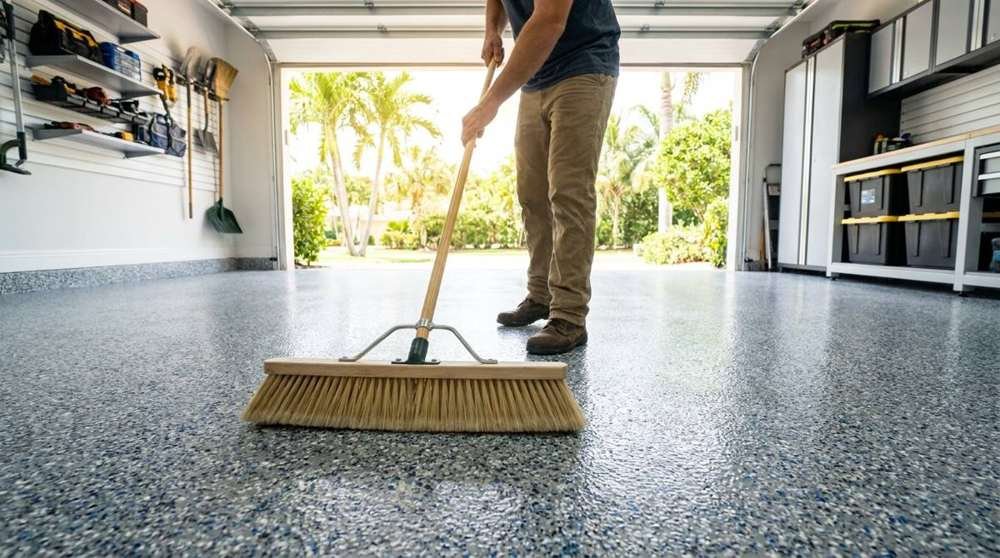
Epoxy floor maintenance is simple when the coating has a strong topcoat and a regular cleaning routine. JC Epoxy Coatings installs garage floor epoxy systems that clean with sweeping, mild soap, and water because the sealed surface keeps most spills from soaking in.
After summer storms, sandy tires, and weekend projects, a garage floor can look dirty faster than it is damaged. This guide shows what to clean, what to avoid, and when South Florida homeowners should ask about resealing or warranty concerns.
What Weekly Cleaning Should Look Like

A coated garage floor needs light, consistent care. Loose grit is the main enemy because it acts like sandpaper under tires, toolboxes, and storage bins.
For most Treasure Coast garages, a weekly routine is enough:
- Blow or sweep out sand, leaves, and grass clippings.
- Mop muddy tracks with warm water and mild cleaner.
- Rinse salt or fertilizer residue after yard work.
- Wipe oil or brake fluid before it spreads.
- Dry standing water near the garage opening.
Avoid harsh solvents unless the product label says the cleaner is safe for coated floors. A UV-stable topcoat is chemical resistant, but repeated solvent use can dull the finish.
JC Epoxy Coatings does not offer pressure washing as a standalone service. The closest offered solution is floor coating work that includes diamond-ground prep before installation.
How Florida Conditions Affect Maintenance

Florida garage floors deal with moisture, heat, and grit in the same week. Port St. Lucie's sandy soil tracks fine particles into garages, while coastal air adds salt residue near Jupiter and Stuart.
That local mix changes maintenance. A floor that looks dusty may actually have abrasive sand sitting on the surface. A floor near the door may collect humidity and afternoon storm runoff.
Summer care
From May through October, afternoon storms push wet tire marks and windblown debris into the garage. Sweep more often during this season. Remove standing water instead of letting it dry into cloudy mineral spots.
Coastal care
Near salt air, rinse residue when it appears. Salt can leave a film that makes the floor feel slick and dull. Regular rinsing protects the topcoat's appearance between deeper cleanings.
For homeowners comparing finish options, residential epoxy flooring can be easier to maintain than bare concrete because spills stay on the surface.
What Can Damage an Epoxy Garage Floor?

Most coating problems start with misuse, impact, or chemistry the floor was not meant to handle. The 10-year JC Epoxy warranty covers adhesion, peeling, and delamination under normal residential use, not damage from heavy impact or undiluted acids.
Use simple protections where the floor takes concentrated wear:
- Put soft pads under metal shelving feet.
- Use a mat under motorcycle kickstands.
- Lift heavy tool chests instead of dragging them.
- Clean battery acid or pool chemicals right away.
- Avoid abrasive scrub pads on glossy finishes.
Hot tires should not harm a properly installed system with a strong topcoat. Problems are more likely when a coating skipped grinding, moisture control, or the final protective layer.
If peeling appears, maintenance is not the fix. The floor needs inspection because vapor, prep failure, or contamination may be pushing the coating off the slab.
When Should You Reseal or Call for Help?

Resealing depends on traffic, sun exposure, and how the garage is used. A lightly used two-car garage may look good for years with basic cleaning. A workshop or golf-cart garage may dull sooner.
Watch for practical signs, not a calendar alone:
- The floor stays hazy after cleaning.
- Water no longer beads on worn traffic lanes.
- Gloss looks uneven near the garage door.
- Fine scratches catch dirt more quickly.
If your floor is within JC Epoxy's service area, a photo or quick call can help decide whether it needs cleaning, a new topcoat, or a closer inspection.
Frequently Asked Questions
What cleaner should I use on a flake epoxy garage floor?
Use warm water and a mild pH-neutral cleaner on a flake epoxy garage floor. Strong degreasers are only needed for oily spills. JC Epoxy Coatings recommends avoiding abrasive pads because they can scuff the clear topcoat that protects the decorative flake.
Can tire marks stain a professionally coated epoxy floor?
Tire marks can leave residue, but they should not permanently stain a properly topcoated floor. Warm tires sometimes transfer rubber or road film. Clean the area with mild cleaner before the residue bakes into a visible haze.
Does the 10-year warranty cover cleaning damage?
The 10-year warranty covers adhesion, peeling, and delamination under normal residential use. Cleaning damage from harsh chemicals, undiluted acids, or abrasive tools is different. Keep maintenance gentle so the warranty and the finish both stay protected.
Keep the Floor Easy to Live With
Epoxy floor maintenance works best when you prevent grit buildup and clean spills before they spread. The floor does not need special polish or complicated products, but it does reward steady care.
If your garage floor has dull areas, peeling, or finish questions, contact JC Epoxy Coatings for guidance or call (954) 994-8204. Alex can help decide whether the surface needs cleaning, repair, or a fresh coating plan.