
7 Common Epoxy Floor Problems (and How Treasure Coast Pros Fix Them)
Peeling, bubbling, hot-tire pickup, yellowing? Learn the 7 most common epoxy floor problems, what causes each one, and how Treasure Coast pros prevent them.
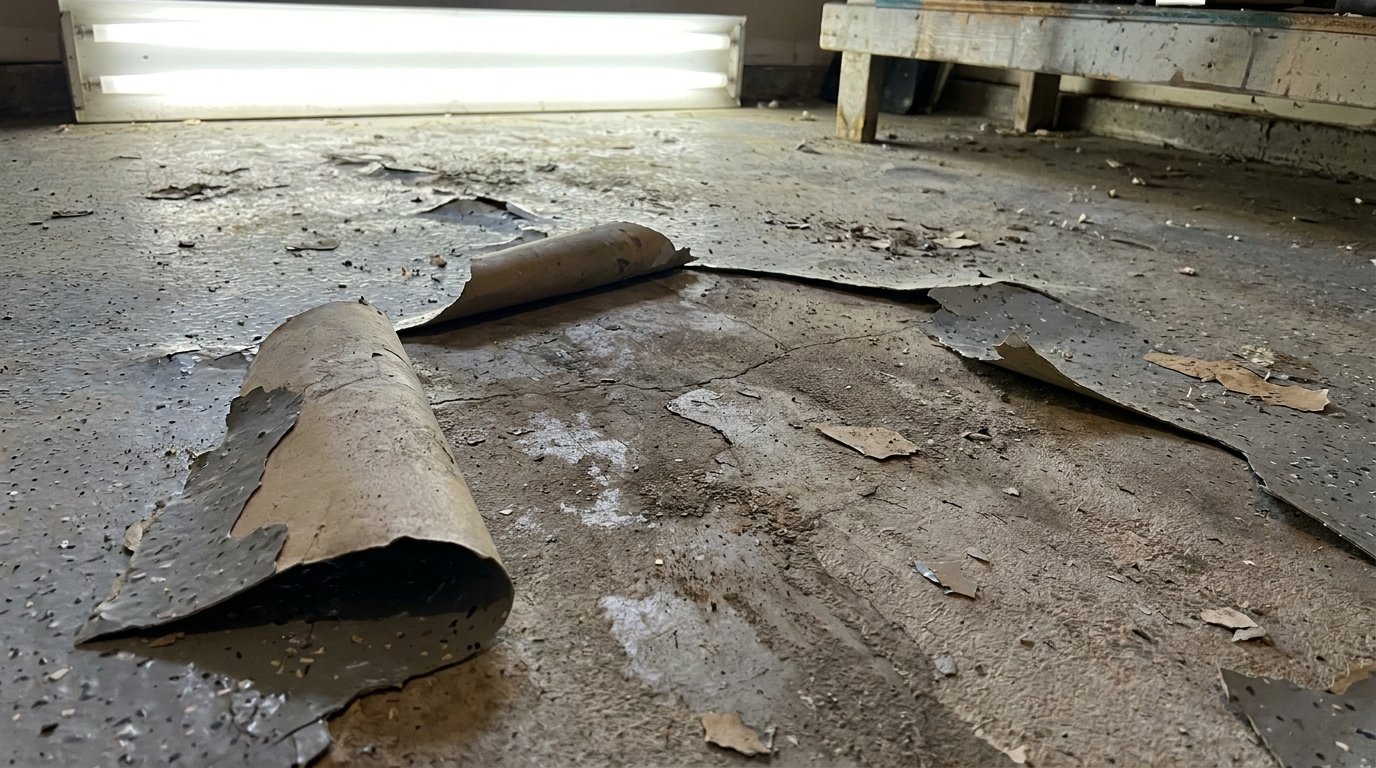
Most epoxy floor problems trace back to inadequate surface prep or missing moisture mitigation rather than a defect in the coating itself. Peeling, bubbling, hot-tire pickup, and yellowing all start underneath the surface. JC Epoxy Coatings prevents these failures through a professional garage floor epoxy system that includes diamond grinding and a moisture vapor barrier on every Treasure Coast job.
Homeowners who search for epoxy floor problems usually assume the coating is the issue. The real cause sits underneath: a slab that was not ground properly, a moisture barrier that was skipped, or a topcoat that was not rated for UV. Seven failure modes follow, each traced from root cause to the fix that prevents a repeat.
1. Peeling and Delamination

Peeling is the most common epoxy complaint on the Treasure Coast. The coating lifts in sheets, often within the first year.
The cause is almost always one of two things: the concrete was not diamond-ground before coating, or moisture vapor is pushing up through the slab and breaking the bond from below. A proper grind and a moisture vapor barrier eliminate both causes.
2. Bubbling and Outgassing

Bubbles form when trapped air or moisture escapes through the coating as it cures. In South Florida, this happens when the slab holds moisture from overnight rain or a high water table and the installer applies epoxy before the surface is dry.
The fix is timing and testing. Professional installers check moisture readings before application and wait for the slab to reach acceptable levels.
3. Hot-Tire Pickup

Hot tires from a sun-baked driveway can soften bare epoxy and pull it off the floor when the car moves. This problem is specific to standard epoxy without a polyaspartic topcoat.
JC Epoxy Coatings' UV-stable polyaspartic topcoat resists the heat transfer that causes pickup. The topcoat cures harder than bare epoxy and handles the surface temperatures Treasure Coast garages reach from May through October.
4. Yellowing and Discoloration

Standard epoxy yellows under sustained UV exposure. Any garage that sits open during the day or receives direct sunlight through windows will show discoloration within months.
The solution is a UV-stable topcoat. Polyaspartic and polyurethane clear coats resist UV degradation and maintain the original color and gloss for the life of the floor.
5. Uneven Coating Thickness

Roller marks, puddles, and thin spots mean the coating was applied inconsistently. This is more common with DIY applications where the homeowner has no training on spread rate or back-rolling technique.
Professional installers control thickness by calculating exact material coverage for the square footage and using consistent application methods across the entire surface.
6. Fish Eyes and Craters

Fish eyes are small circular defects where the coating pulls away from a spot on the concrete, usually caused by oil, silicone, or contaminant residue on the surface.
Diamond grinding removes the contaminated surface layer entirely. Acid etching cannot reach contaminants embedded in the concrete, which is why fish eyes appear so frequently on DIY-prepped floors.
7. Premature Wear and Abrasion

A professionally installed epoxy floor should handle daily vehicle traffic for a decade or more. Premature wear usually means the coating was applied too thin, the concrete profile was too shallow for proper adhesion, or the topcoat was omitted entirely.
The garage floor epoxy prep steps that professional installers follow on every job are specifically designed to prevent this progression from shortcutted prep to early failure.
Frequently Asked Questions
Why is my epoxy garage floor peeling?
Epoxy garage floors peel when the coating loses its bond with the concrete underneath, most commonly because the slab was not diamond-ground before application. In South Florida, moisture vapor traveling up through the slab is the second leading cause. A calcium chloride moisture test and a dedicated vapor barrier, combined with mechanical grinding, prevent peeling on new installations.
What causes bubbles in epoxy floor coating?
Bubbles in epoxy floor coating form when trapped air or moisture escapes through the wet coating during the curing process. Applying epoxy over a damp slab, working in high humidity without proper ventilation, or mixing the resin and hardener too aggressively all introduce gas that creates visible bubbles. Professional epoxy floor coatings in Fort Pierce and across the Treasure Coast control each variable through moisture testing and application timing.
Can you fix a failed epoxy garage floor?
A failed epoxy garage floor can be fixed by fully removing the old coating, diamond-grinding the exposed concrete, and applying a new system with proper prep. JC Epoxy Coatings does not coat over a failing floor because the new layer would inherit every adhesion problem from the old one. Stripping and re-prepping the slab is the only reliable path to a lasting result.
Protect Your Floor Before Problems Start

Every problem on this list starts with a shortcut during installation. Diamond grinding, moisture testing, a vapor barrier, and a UV-stable topcoat eliminate the conditions that let these failures develop.
Alex Jimenez personally handles every JC Epoxy Coatings installation across the Treasure Coast. Schedule a free garage floor coating estimate or call (954) 994-8204 to discuss your garage.