
Epoxy Floor Pros and Cons Every Port St. Lucie Homeowner Should Know
Honest look at epoxy floor pros and cons for Florida garages. Learn what works, what fails, and how professional installation changes the equation.
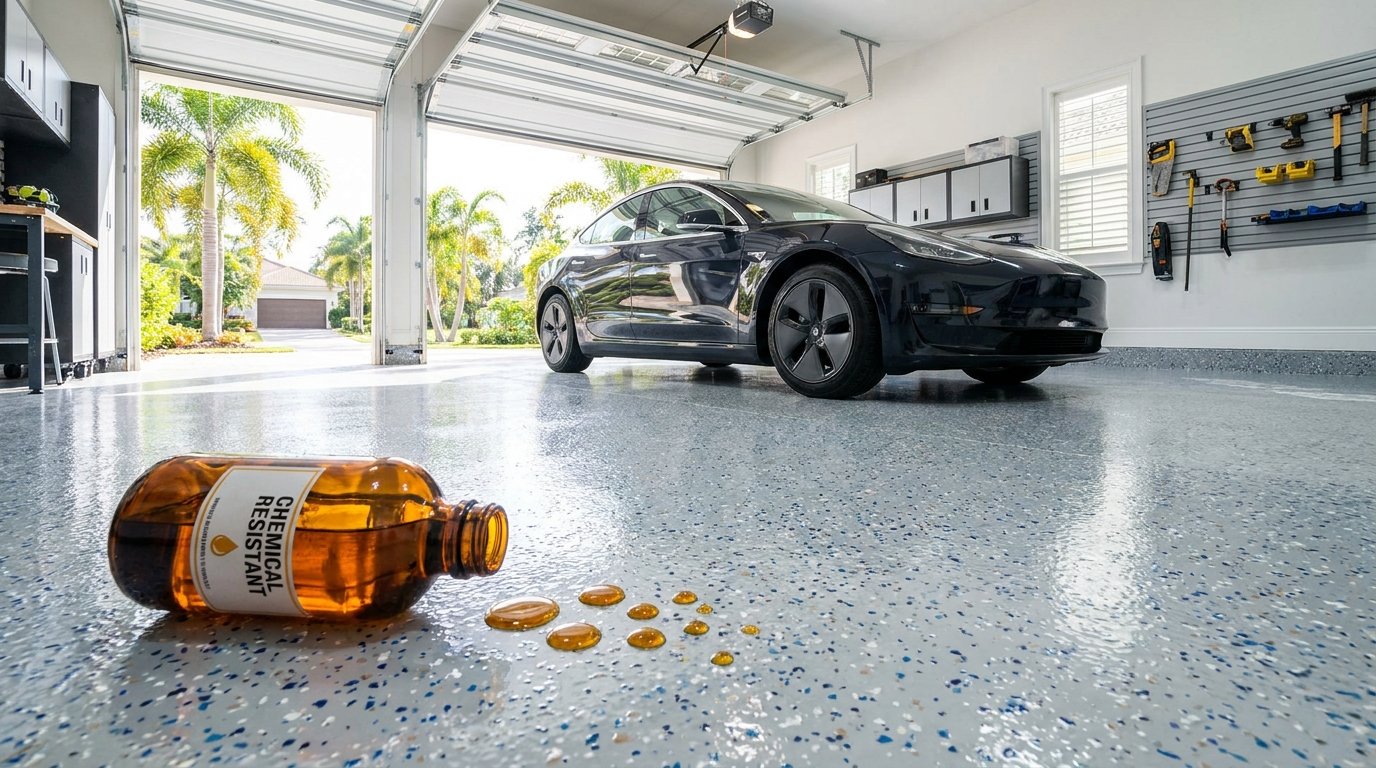
Professional epoxy garage floor coating delivers chemical resistance, easy cleanup, and a 10-to-15-year lifespan when installed with diamond grinding and a moisture vapor barrier. Trade-offs include a one-day cure window and higher upfront cost than DIY kits. JC Epoxy Coatings installs epoxy garage floor coating services with UV-stable polyaspartic topcoats across the Treasure Coast.
Most pros-and-cons lists treat epoxy’s drawbacks as dealbreakers, but nearly every failure applies to bare epoxy or DIY kits installed without a protective topcoat. Professional systems sealed with polyaspartic eliminate the yellowing, peeling, and hot-tire pickup that worry homeowners most. Each advantage and each trade-off maps to a specific installation step, and the step that gets skipped decides which column wins.
Where Epoxy Garage Floors Deliver

- Chemical and stain resistance: Oil, gasoline, brake fluid, and cleaning solvents wipe off without staining. The sealed surface prevents chemicals from penetrating into the concrete below.
- Low maintenance: A coated floor needs only a broom and occasional mop. No waxing, sealing, or annual recoating cycle.
- Durability under traffic: A professionally installed system handles daily vehicle traffic, rolling tool carts, and dropped tools without chipping or cracking.
- Moisture protection: With a vapor barrier underneath, the coating blocks South Florida’s rising moisture from deteriorating the slab or the finish above it.
These advantages hold across every system JC Epoxy installs, from basic solid color to premium metallic finishes, because the five-step prep process stays the same regardless of which decorative layer goes on top.
Real Drawbacks to Consider

- Cure time: The floor needs 24 hours before foot traffic and a full day before vehicles return. Plan to keep the garage cleared for that window.
- Upfront cost: Professional installation runs $4 to $12 per square foot, significantly more than a $100 hardware-store kit. The cost reflects diamond grinding, moisture mitigation, and materials that actually last.
- UV sensitivity without a topcoat: Bare epoxy yellows and chalks under sustained sunlight. This con disappears when a UV-stable polyaspartic topcoat covers it.
- Not a DIY-friendly system: Proper installation requires diamond-grinding equipment, moisture testing, and precise application timing. Hardware-store kits skip most of these steps, which is why they fail within two to three years.
Many of the common epoxy floor failure modes homeowners read about online trace directly back to skipped prep or a missing topcoat layer.
How Professional Installation Changes the Equation

The cons listed above apply to bare epoxy or DIY kits. Professional garage floor coatings in Port St. Lucie address every listed drawback through process, not marketing.
Diamond grinding replaces acid etching, creating a permanent mechanical bond. A moisture vapor barrier stops humidity from undermining the coating from below. A UV-stable polyaspartic topcoat eliminates yellowing and hot-tire pickup. The result is a floor backed by a 10-year warranty that covers adhesion, peeling, and delamination under normal residential use.
Alex Jimenez tests every slab’s moisture readings before quoting, then adjusts the barrier specification to match actual conditions. The difference between a floor that peels in two years and one that lasts fifteen is never the epoxy itself. It’s the prep underneath and the topcoat on top.
Frequently Asked Questions
Does epoxy flooring crack easily?
Epoxy flooring does not crack easily when installed over properly prepared concrete with all existing damage addressed first. Cracking typically happens when the slab underneath shifts due to settling or when a coating is applied without adequate crack repair during prep. JC Epoxy Coatings fills and levels every crack and spall before the base coat goes down, which prevents the coating from inheriting or amplifying existing slab damage.
Is epoxy flooring slippery when wet?
Standard high-gloss epoxy can be slippery when wet, but flake and quartz systems include a textured decorative layer that provides built-in slip resistance. JC Epoxy’s vinyl flake system adds traction without sacrificing the glossy, professional finish. For areas with frequent water exposure, quartz epoxy offers even stronger grip under wet conditions.
How long does a professional epoxy garage floor last?
A professionally installed epoxy garage floor with diamond grinding and a moisture vapor barrier typically lasts 10 to 15 years on the Treasure Coast. DIY kits average two to three years in South Florida’s humidity because they skip the prep steps that prevent delamination. The 10-year warranty JC Epoxy Coatings provides covers adhesion failure and peeling under normal residential use.
Weigh the Trade-Offs Before You Commit

Epoxy’s cons are real, but they belong to a specific version of the product: bare epoxy applied without proper prep or a protective topcoat. A professional system with diamond grinding, a moisture barrier, and a UV-stable polyaspartic seal eliminates the failure modes that fill online complaint threads.
Alex Jimenez personally handles every JC Epoxy Coatings estimate and installation. Schedule a free garage floor coating estimate or call (954) 994-8204 for a no-obligation quote.