Types of Garage Floor Coatings: A Treasure Coast Homeowner's Guide
Compare garage floor coating types for Treasure Coast homes, including flake, metallic, solid color, quartz, and grind-and-seal finishes.
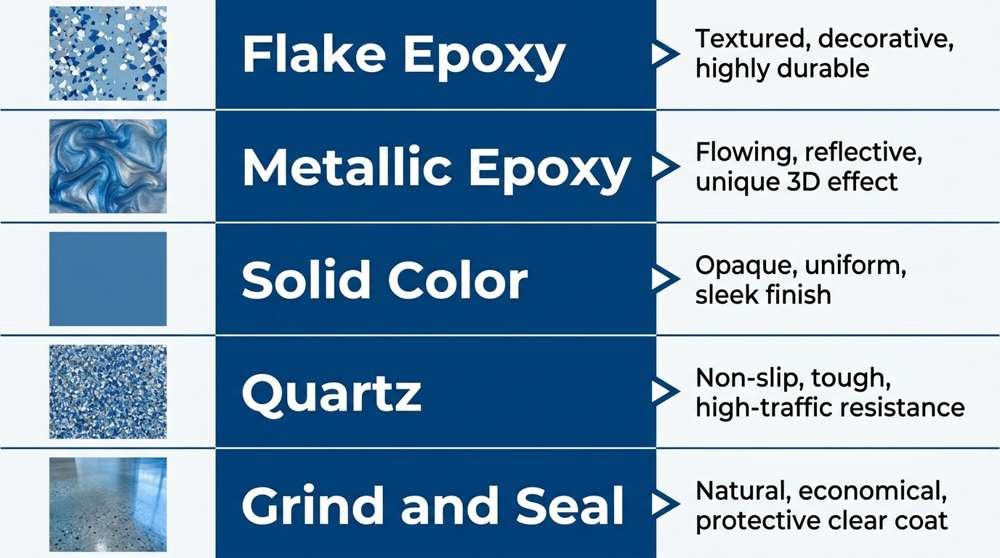
Garage floor coating types usually fall into flake epoxy, metallic epoxy, solid color epoxy, quartz systems, and grind-and-seal finishes. JC Epoxy Coatings installs garage floor epoxy systems across the Treasure Coast, using each finish for a different mix of durability, texture, budget, and design.
A homeowner in Port St. Lucie usually needs a different floor than a showroom-style garage in Jupiter Island. This guide compares the main coating types JC Epoxy offers, explains where each one fits, and shows how South Florida moisture changes the decision.
The Main Garage Floor Coating Types

Most garage floors start with the same question: do you want a practical work surface, a decorative feature, or a simple sealed floor? The answer narrows the coating type quickly.
JC Epoxy's epoxy finish options include several systems, but these are the garage-focused choices homeowners compare most:
- Flake epoxy for texture, traction, and everyday use
- Metallic epoxy for depth, movement, and custom design
- Solid color epoxy for a clean, functional surface
- Quartz epoxy for higher abrasion resistance
- Grind and seal for a natural concrete look
Tile, painting, and general handyman work are not JC Epoxy services. The closest offered alternatives are floor coating systems designed for existing concrete.
All coating types depend on preparation. Diamond grinding, crack repair, moisture control, and a protective topcoat matter more than the name of the finish.
How Each Coating Type Performs

Each finish changes the garage's look, texture, and maintenance needs. The right choice depends on how you use the space.
Flake epoxy
Flake epoxy flooring is the most common residential garage choice. Colored vinyl flakes hide dust, small imperfections, and daily debris better than a smooth floor.
The texture also helps with traction when tires bring in rainwater. That makes flake systems a practical fit for Treasure Coast garages that see storms, beach gear, tools, and storage traffic.
Metallic epoxy
Metallic epoxy flooring creates a flowing, three-dimensional effect. The pigments move through the wet epoxy, so no two floors look identical.
Metallic floors make sense when the garage is part of the home's design. They are popular in luxury areas like Palm Beach Gardens and Boca Raton, where the floor itself becomes a feature.
Solid color epoxy
Solid color epoxy flooring gives you a smooth, single-tone finish. It is clean, straightforward, and useful for workshops, utility garages, and commercial-style spaces.
Solid floors show dust and scratches more easily than flake systems. They work best when appearance needs to be simple, not decorative.
What Florida Concrete Needs Beneath the Finish

The coating type is only the visible layer. South Florida concrete needs moisture control underneath because vapor can rise through the slab and push coatings loose.
JC Epoxy includes a moisture vapor barrier on every job. That step matters in Port St. Lucie, where sandy soil and a high water table can keep concrete damp below the surface.
A proper garage floor system also includes:
- Diamond grinding instead of acid etching
- Crack and chip repair before coating
- A pigmented epoxy base coat
- The selected decorative or functional finish
- A UV-stable clear topcoat
This sequence is why two floors with the same finish can perform differently. The prep decides whether the coating bonds or begins to peel.
Which Garage Floor Coating Type Fits Your Home?

Choose the floor by use first, then appearance. A garage that stores tools, bikes, and beach gear needs a forgiving surface. A luxury garage can prioritize depth and color movement.
For most homeowners in JC Epoxy's service area, flake epoxy gives the best balance. It hides debris, adds grip, and comes in color blends that fit Florida homes.
Metallic epoxy is the better design choice when the garage is visible, finished, or connected to a premium living space. Solid color epoxy works when the goal is a clean work surface at a lower visual complexity.
Quartz is usually better for higher-traffic commercial or safety-first areas. Grind and seal fits homeowners who want exposed concrete character instead of a full decorative broadcast.
Frequently Asked Questions
Which garage floor coating type hides sand best in Port St. Lucie?
Flake epoxy usually hides sand best in Port St. Lucie garages. The multi-color chip pattern disguises fine grit better than solid color epoxy. JC Epoxy Coatings often recommends flake systems for daily-use garages because the texture also improves wet-foot traction.
Is metallic epoxy too slippery for a garage floor?
Metallic epoxy can be made more practical with the right topcoat texture. A fully smooth metallic finish may feel slick when wet. The installer can adjust the clear coat or recommend flake if traction matters more than a showroom look.
Can I switch coating types after seeing samples?
You can usually switch coating types before installation begins. Physical samples help you compare color, texture, and gloss in your own garage light. Once the floor is coated, changing from flake to metallic or solid requires surface preparation and a new system.
Pick the Finish That Matches Daily Use
The best garage floor coating type is the one that matches your traffic, cleaning habits, and design goals. Flake handles everyday use, metallic creates a custom feature, and solid color keeps things simple.
If you want help comparing samples, contact JC Epoxy Coatings for a free estimate or call (954) 994-8204. Alex can inspect your concrete and recommend a finish that fits your garage.