
Polyaspartic vs Epoxy Floor Coating: Which Is Best for Treasure Coast Garages?
Compare polyaspartic and epoxy floor coatings for Florida garages. See cure time, UV resistance, cost, and why the best systems layer both.
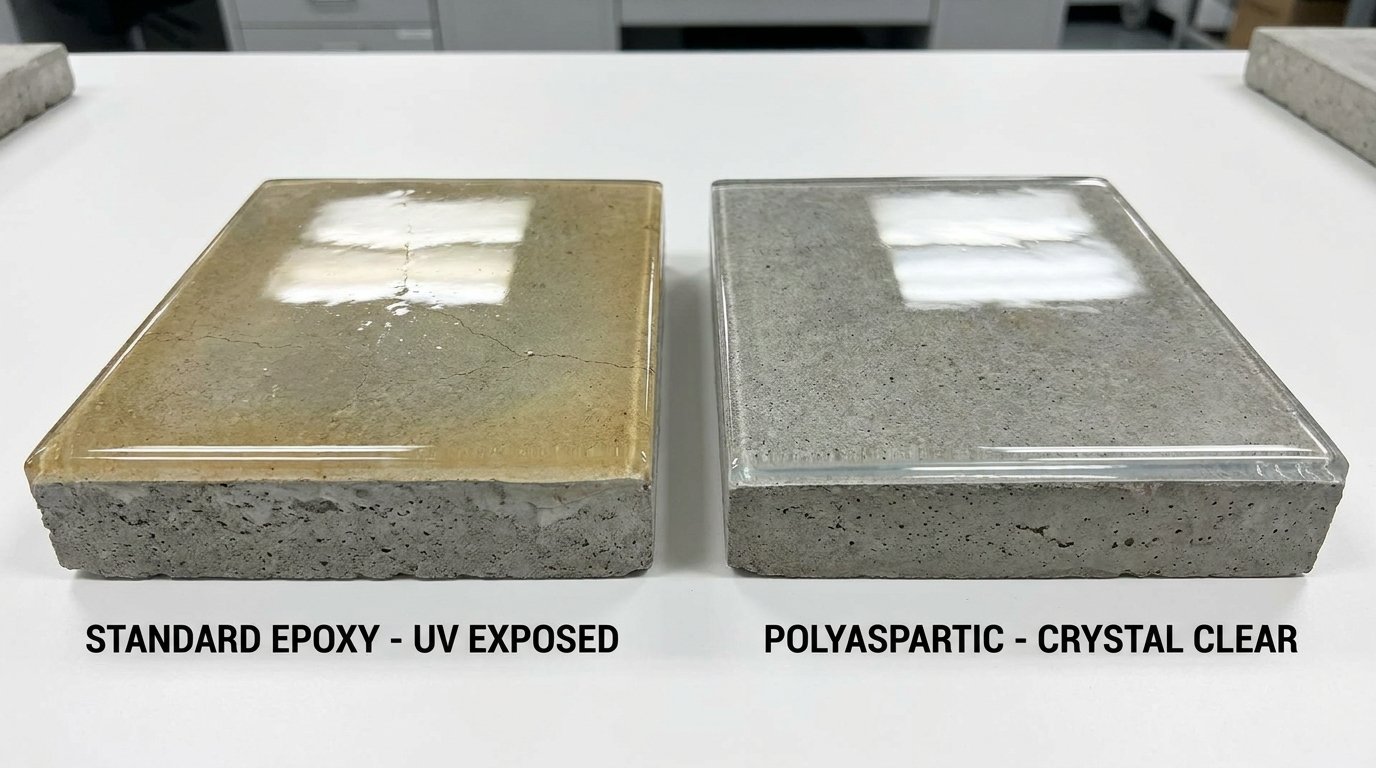
Polyaspartic floor coating cures faster and resists UV better than standard epoxy, but epoxy bonds more aggressively to concrete during the initial cure. The strongest garage floor systems for South Florida layer both chemistries: an epoxy base for adhesion and a polyaspartic topcoat for UV stability and chemical resistance. JC Epoxy Coatings installs this layered epoxy and polyaspartic system on every residential garage across the Treasure Coast.
Homeowners usually land on one side or the other: a full epoxy floor or a polyaspartic-only system. The choice looks simple until quotes reveal a cure-time gap measured in days and a UV-resistance difference that shows up within one Florida summer. One bonds harder to concrete; the other cures in hours and blocks UV for years. Side by side against Treasure Coast heat and humidity, neither chemistry wins alone.
How Epoxy and Polyaspartic Coatings Differ

Epoxy and polyaspartic are both resin-based coatings, but they cure differently and perform differently once installed.
Epoxy creates a hard, chemical-resistant surface with excellent adhesion to diamond-ground concrete. The trade-off is cure time: most epoxy systems need 24 to 72 hours before foot traffic and up to seven days before vehicles can park on the surface. Standard epoxy also yellows under sustained UV exposure, which matters in any Florida garage that sees sunlight through an open door.
Polyaspartic cures in four to six hours and allows vehicle traffic within 24 hours. It resists UV without yellowing and handles hot-tire pickup better than epoxy alone. The limitation is bonding: polyaspartic applied directly to bare concrete without an epoxy primer tends to lose adhesion faster, especially on slabs with active moisture vapor transmission.
Why the Best Systems Layer Both

The debate between epoxy and polyaspartic misses the point. Professional-grade garage floor coatings in Stuart and across the Treasure Coast use both in the same system because each chemistry solves the other’s weakness.
JC Epoxy’s five-step process starts with diamond grinding the concrete to create a mechanical bond, then applies a pigmented epoxy base coat with a moisture vapor barrier. The epoxy locks to the slab. A UV-stable polyaspartic topcoat goes over the epoxy, sealing in the decorative layer and protecting against UV, chemicals, and hot tires. The polyaspartic layer is what allows same-day completion: the floor is walkable within hours and ready for vehicles the next morning.
This layered approach is why JC Epoxy offers a 10-year warranty on adhesion, peeling, and delamination. Neither chemistry alone could support that guarantee in South Florida’s conditions.
Cost Comparison on the Treasure Coast

Material cost is not the full picture. Here’s how the three approaches compare for a standard two-car garage (400–500 sqft):
- Epoxy-only system: $4–$7/sqft installed. Lower upfront cost, but may need recoating sooner if UV exposure causes yellowing and surface wear.
- Polyaspartic-only system: $6–$10/sqft installed. Higher material cost, faster cure, UV-stable, but weaker long-term adhesion without an epoxy base layer.
- Hybrid system (epoxy base + polyaspartic top): $5–$9/sqft installed. Best long-term value because the epoxy handles bonding and the polyaspartic handles everything the sun and tires throw at it.
The hybrid system’s slightly higher upfront cost pays off because the layered chemistry resists the UV, moisture, and hot-tire conditions that cause standalone systems to fail early.
That durability gap grows wider in South Florida, where the epoxy garage floor cost shifts toward prep and moisture mitigation rather than material choice.
Frequently Asked Questions
Is polyaspartic better than epoxy for garage floors?
Polyaspartic outperforms epoxy in UV resistance and cure speed, but epoxy creates a stronger initial bond with diamond-ground concrete. The most durable garage floors in South Florida use both: an epoxy base coat for adhesion and a polyaspartic topcoat for UV stability and chemical resistance. Choosing one over the other sacrifices either bonding strength or long-term surface protection.
Can you apply polyaspartic over an existing epoxy floor?
Polyaspartic can be applied over an existing epoxy floor if the epoxy surface is properly scuffed and free of contamination. Professional installers lightly abrade the old epoxy to create a profile for the polyaspartic to grip. Applying polyaspartic over a failing or peeling epoxy floor without removing the damaged coating first leads to the same delamination problem within months.
How long does a polyaspartic garage floor last in Florida?
A polyaspartic topcoat over a properly prepped epoxy base typically lasts 10 to 15 years on a Treasure Coast garage floor. JC Epoxy Coatings backs each installation with a 10-year warranty covering adhesion and delamination. The lifespan depends more on the quality of prep work underneath the coating than on the polyaspartic layer itself.
Which System Belongs on Your Garage Floor?

Epoxy alone bonds well but yellows in Florida sun. Polyaspartic alone cures fast but struggles to stick without a proper base. The system that performs best on the Treasure Coast combines both: epoxy for the bond, polyaspartic for the protection.
Alex Jimenez personally handles every JC Epoxy Coatings installation from estimate through topcoat. Schedule a free garage floor coating estimate or call (954) 994-8204 for a no-obligation quote.